
How swapping lithium-ion powered trucks into its fleet of lift trucks has improved operations.
Sometimes the biggest operational improvements come from steady, practical decisions rather than a complete overhaul. That's the approach Badger Paperboard took when it began replacing portions of its mixed fleet of propane and lead-acid powered forklifts with integrated lithium-ion trucks. According to a recent Modern Materials Handling system report, the results have been significant: lower maintenance costs, reduced fuel expenses, and increased productivity across multiple facilities.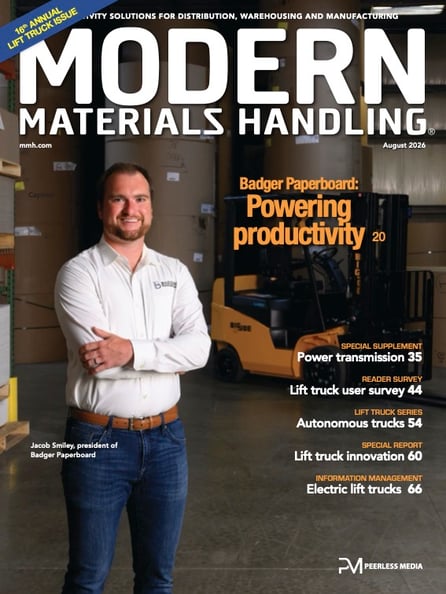
A Practical Approach to Fleet Modernization
With four facilities nationwide and 225,000 square feet of production space, Badger Paperboard relies on lift trucks to keep materials moving throughout its operation. Forklifts are used for everything from unloading raw materials and transporting finished goods to supporting shipping operations. The company's previous fleet consisted primarily of internal combustion and lead-acid powered trucks that had been in service for roughly 15 years.
To start converting its fleet away from lead-acid batteries and propane, Badger replaced two forklifts in its 50,000-square-foot Fredonia, WI facility, (Wolter), one in California (Big Joe Lift Trucks), one in Texas (Lonestar) and one in North Carolina (Southeast Industrial Equipment). This allows operators and leadership teams to evaluate performance in real-world conditions while continuing to use existing equipment where appropriate.
Maintenance Savings Add Up
One of the primary drivers behind the move was maintenance.
Lead-acid batteries require ongoing attention, while internal combustion trucks bring their own maintenance demands related to fuel systems and engine service. According to Jacob Smiley, president of Badger Paperboard, the shift to integrated lithium-ion technology has dramatically improved fleet upkeep. The company estimates maintenance costs have decreased by approximately 50%, while employees spend less time addressing equipment-related issues.
For operations managers, maintenance isn't just a cost item. Every minute spent servicing equipment is time that isn't spent moving product. Reducing maintenance requirements helps keep trucks available and operators productive throughout the day.
Lower Operating Costs Through Electrification
The financial benefits extend beyond maintenance.
Based on data collected through the Big Joe Pulse telematics Badger reported annual fuel savings of approximately $2,788 per year per truck when comparing a 5,000-pound capacity integrated lithium-ion forklift to a comparable internal combustion unit. As facilities continue to evaluate long-term operating costs, savings like these highlight how electrification can support both productivity goals and cost-control initiatives.
Intuitive Ergonomics for Operator Comfort
Features such as intuitive controls, comfortable operator compartments, and clear visibility help operators stay productive while maintaining confidence in tight warehouse environments. Many models are designed to minimize repetitive strain by providing responsive steering, easy-to-reach controls, and smooth operation, allowing operators to focus on moving products efficiently rather than fighting the equipment. The result is a forklift that supports operator comfort, improves productivity, and helps create a safer, more enjoyable working experience shift after shift.
Charging Designed Around the Operation
One of the often-overlooked advantages of integrated lithium-ion equipment is charging flexibility.
Traditional battery-changing procedures and lengthy charging cycles can interrupt workflows and require dedicated space and labor. Integrated lithium-ion forklifts allow facilities to take advantage of opportunity charging during breaks or other natural pauses in production. This helps eliminate many of the disruptions historically associated with battery management.
For manufacturers operating multiple shifts or managing tight production schedules, charging ease can have a meaningful impact on equipment availability.
Building Toward the Future
The early success of the program has strengthened Badger's confidence in lithium-ion technology. According to the report, the company plans to continue expanding its use of integrated lithium-ion forklifts and intends to equip a planned 50,000-square-foot expansion at its Wisconsin facility with an all-lithium-ion fleet.
The decision reflects a broader trend across material handling. Companies are increasingly evaluating forklifts not only on purchase price, but on total operating costs, maintenance requirements, uptime, and operator experience.
What Other Operations Can Learn
Badger Paperboard's experience demonstrates that fleet electrification doesn't require a complete fleet replacement on day one. A phased approach allows operations to evaluate performance, build operator confidence, and measure real-world results before expanding adoption.
The pattern holds: when equipment reduces maintenance, lowers operating costs, and keeps operators moving, productivity follows. As more facilities explore the transition from propane and lead-acid fleets, integrated lithium-ion forklifts are proving that practical improvements today can create lasting operational benefits tomorrow.
A special thanks to Badger Paperboard, our dealer partners, and our team at Big Joe.
TAGS: