
At Big Joe Forklifts, we've seen it time and time again: operators who are skeptical of integrated lithium-ion forklifts often change their perspective after getting behind the wheel. Once they experience the performance, comfort, and simplicity firsthand, many of the common concerns fade away. Let's take a closer look at what's driving the hesitation and how it compares to the reality of today's technology.
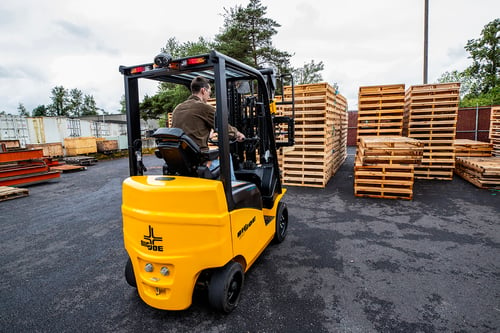
Myth #1: Electric Forklifts Don't Have Enough Power
The Reality
Power is no longer exclusive to internal combustion forklifts. Thanks to advancements in lithium-ion battery technology, many electric forklifts can equal or exceed the performance of traditional fuel-powered models. Modern integrated lithium-ion forklifts are engineered to deliver consistent, reliable performance throughout the entire shift. Built to support demanding warehouse environments, these forklifts offer the power, efficiency, and durability needed to keep materials moving and productivity high.
-
Power stays strong even as the battery drains
-
Electric forklifts give you immediate power the second your foot touches the pedal
-
Big Joe's trucks are purpose built around integrated lithium-ion UL Certified technology, not adapted from older engine designs
Myth #2: Charging Takes Too Long
The Reality
Opportunity charging gives operators the flexibility to recharge forklifts during breaks, shift changes, and other periods of downtime, helping maintain productivity without interrupting operations. Because lithium-ion batteries can be charged quickly and efficiently, there is no need for time-consuming battery swaps. In many operations, this also eliminates the need for a dedicated battery room, freeing up valuable facility space while simplifying fleet management and reducing overall operating costs.
Big Joe Pulse telematics is standard on every truck with five years of coverage included. While most telematics systems are an afterthought, Pulse is built in. From battery health and charging behavior to fault diagnostics and energy usage, it gives you the visibility to run a tighter operation, plan your next move with real data, and catch small issues before they become downtime.
Myth #3: Electric Forklifts Can't Handle Multi-Shift Operations
The Reality
Modern lithium-ion forklift systems are built to withstand intensive, high-demand operations, making them a viable solution for a wide range of warehouse and distribution environments. With fast charging capabilities and the flexibility of opportunity charging, these systems can support longer operating schedules while minimizing downtime. Although fleet requirements should always be aligned with specific application needs, today's electric forklifts are no longer limited to light-duty tasks and are increasingly capable of handling demanding material handling operations.
-
This allows for greater scheduling flexibility and more output
-
Consistent truck availability
-
Less costly downtime
Myth #4: Electric Forklifts Cost More
The Reality
The purchase price is only one part of the overall cost of ownership. Looking beyond the initial investment to ongoing expenses like fuel, battery maintenance, watering, battery replacements, and service costs paints a fuller picture of long-term operating costs.
Electric forklifts have no oil, spark plugs, coolants, or exhaust filters to service or replace. Facilities also no longer need dedicated, expensive ventilation systems or bulk fuel storage zones.
-
Over $5,200 in annual fuel savings per truck compared to LPG View High-Usage Case Study >
-
Eliminates fuel and costly maintenance
-
Fewer labor hours spent managing batteries
Myth #5: Electric Forklifts are Complicated to Maintain
The Reality
The reality here is easy to explain; fewer moving parts or items that require routine service or replacement. Integrated lithium-ion forklifts also eliminate tasks such as battery watering and reduce the maintenance associated with traditional lead-acid batteries.
This unique design helps minimize downtime, lowers maintenance costs, and allows technicians to spend less time on repairs and more time keeping equipment productive. For warehouse operations, that often means more uptime, fewer service interruptions, and a lower total cost of ownership over the life of the truck.
-
Operators can focus on the task at hand instead of maintenance
-
More materials moved daily with less hassle
-
A more productive, content workforce
Key Takeaways
The conversation around electric forklifts has shifted from "Can they do the job?" to "Why are we still dealing with the limitations of older technology?"
-
Evaluate total operating costs, not just purchase price
-
Talk with your dealer about integrated lithium-ion options
-
See how modern electric equipment fits your application before assuming it can't
The future is electric because it solves real problems operators and warehouse managers face every day. We are committed to empowering the people who move things. Schedule a demo today and experience the benefits of integrated lithium-ion firsthand.